If you think of braces, the very first thought you think of could be straightening your teeth. But braces can do more than straighten your smile. Braces can also improve bite alignment by moving teeth into better positions, helping the upper and lower teeth fit together correctly. If you’re thinking, “Can braces fix jaw alignment in adults? The answer is yes. Proper jaw alignment improves the overall health of your mouth regarding comfort and function. Thus, understanding the science behind how braces can help you achieve this and why proper jaw alignment is essential for your health is crucial.
Key Takeaways
Braces primarily move teeth into better positions, which can improve how the upper and lower teeth fit together
Braces can correct common bite problems like overbites, underbites, crossbites, and open bites.
- For severe skeletal jaw misalignments, braces alone may not be enough — jaw surgery combined with orthodontics may be needed.
- Treatment timelines vary from 6 months for mild cases to 2-3 years for more complex jaw alignment issues.
- A full orthodontic evaluation is the only way to know which approach — braces alone, or braces with surgery — is right for you.
What Is Jaw Alignment and What Does a Misaligned Jaw Mean?
Neutral jaw position is how your two lower and upper jaws are positioned when chewing. It’s the condition where your jaws are correctly placed to ensure your teeth fit as required when chewing, biting, and even talking. However, any malocclusion, including underbite, overbite, or crossbite, can cause many problems, from wear and tear to headaches and joint pain.

- A properly aligned jaw ensures maximum function and comfort.
- Uneven alignment of teeth can lead to discomfort and wear.
- Problems when chewing or speaking.
Common Types of Jaw Misalignment
Jaw misalignment, also called malocclusion, happens when the upper and lower teeth don’t fit together correctly when biting down. According to clinical research on orthodontic treatment, correcting these bite issues plays a key role in long-term oral health and jaw function. The most common types include:
- Overbite — The upper front teeth significantly overlap the lower front teeth.
- Underbite — The lower front teeth sit in front of the upper front teeth.
- Crossbite — Some upper teeth sit inside the lower teeth when biting down.
- Open Bite — The front upper and lower teeth don’t touch when the back teeth are closed, leaving a visible gap.
These issues can stem from genetics, childhood habits like thumb-sucking, or injury. Left untreated, they can contribute to uneven tooth wear, jaw pain, and difficulty chewing or speaking.
What Are the Signs of Jaw Misalignment?
Jaw misalignment can affect how your upper and lower teeth fit together and how comfortably you use your mouth. Some signs may be noticeable when biting, chewing, or speaking. Common signs include:
Upper and lower teeth not meeting evenly when you bite.
Difficulty biting or chewing certain foods.
A noticeable overbite, underbite, crossbite, or open bite.
Uneven tooth wear.
Difficulty closing your lips comfortably.
Jaw discomfort or clicking when opening and closing your mouth.
Not everyone with these signs has a structural jaw problem. Some symptoms may be related to tooth positioning or other dental conditions. An orthodontic evaluation can help identify the cause.
What Causes Jaw Misalignment?
Jaw misalignment can develop because of differences in jaw growth, tooth positioning, or other factors. Common contributing factors include:
Genetics: Inherited differences in jaw size and shape can affect how the upper and lower jaws fit together.
Childhood habits: Prolonged thumb sucking or pacifier use may contribute to certain bite problems.
Tooth development: Missing, extra, crowded, or improperly positioned teeth can affect bite alignment.
Jaw injuries: Trauma can sometimes affect the position or development of the jaw.
Uneven jaw growth: If the upper and lower jaws grow at different rates, their relationship may become misaligned.
Understanding the cause helps an orthodontist determine whether treatment should focus on moving teeth, addressing jaw growth, or correcting a more significant skeletal discrepancy.
How Do Braces Work to Improve Jaw Alignment?
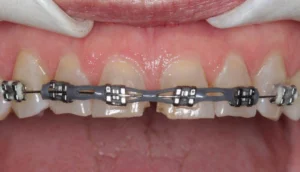
Braces work through three main components acting together: brackets attached to each tooth, a thin archwire that threads through them, and small elastics or ligatures that hold the archwire in place. Whether you choose traditional metal braces or clear ceramic braces, the archwire applies continuous, gentle pressure that guides teeth — and over time, the surrounding jaw structure — into proper position.
As teeth move, the bone around their roots gradually changes to support their new positions. Bone tissue breaks down on one side of the tooth to allow movement (resorption), while new bone forms on the other side to support it. This natural process allows braces to move teeth and improve their alignment over time.
How Do Braces Correct Tooth Position and Jaw Alignment?
Braces use gentle pressure to move teeth into better positions. As teeth move, the surrounding bone adjusts to support them. This helps the upper and lower teeth fit together more comfortably and improves bite alignment.
Braces can help correct common bite problems, including:
Overbite: Reduce excessive overlap between the upper and lower front teeth.
Underbite: Improve how the upper and lower front teeth meet.
Crossbite: Move teeth into better positions so the upper and lower teeth fit together properly.
Open Bite: Help close gaps between the upper and lower front teeth when the problem is caused by tooth positioning.
However, braces mainly move teeth and cannot directly reposition adult jawbones. If the jawbones themselves are significantly misaligned, braces alone may not be enough. In such cases, an orthodontist may recommend jaw surgery along with braces. A full orthodontic evaluation can help determine the right treatment.
Can Braces Fix Jaw Alignment in Adults?
Some people believe braces are only intended for teenagers. However, adults are also able to get orthodontic treatments. Indeed, many adults choose to use braces for problems with jaw alignment. However, whether your problem developed over time or was present in childhood, braces can fix the issue and help achieve a better bite.
- Braces can be effective for adults and children.
- Adults may notice a significant improvement in the alignment of their jaws with braces.
- Adult braces may require a bit longer than those for children; however, they are equally effective.
For adults considering treatment for bite or alignment concerns, an orthodontist for adults in Tampa Bay can evaluate the jaw and teeth to determine which treatment may be appropriate.
Can Adults Correct Jaw Alignment Without Surgery?
Some adults can improve jaw alignment without surgery when the problem is mainly related to tooth positioning or a dental bite discrepancy. Braces and, in selected cases, clear aligners can move teeth into better positions and improve how the upper and lower teeth fit together.
However, adults have completed most of their jaw growth. This means braces cannot correct every structural jaw problem. If the upper or lower jaw is significantly mispositioned, orthodontic treatment alone may not be enough.
An orthodontist can evaluate the bite and jaw relationship to determine whether braces, clear aligners, or a combination of orthodontic treatment and jaw surgery is appropriate.
When Braces Aren’t Enough: The Role of Jaw Surgery
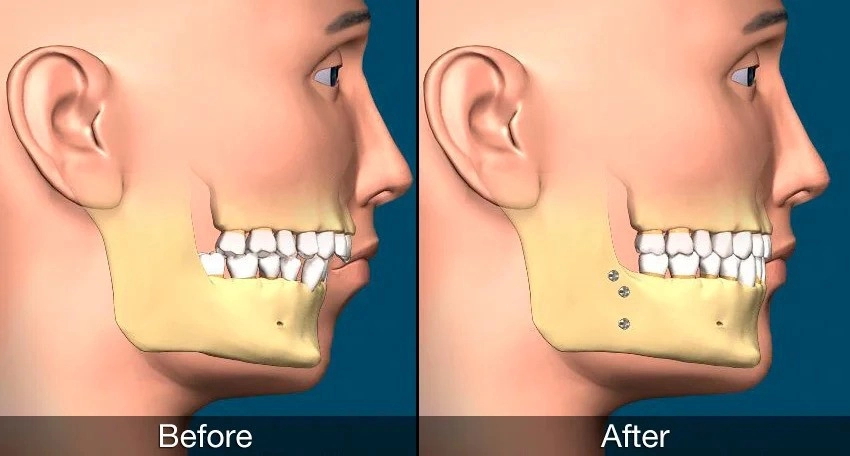
While braces are highly effective for correcting how teeth fit together, they have limits. For adults with severe skeletal discrepancies — where the misalignment is in the jawbone itself rather than just tooth position — braces alone typically cannot fully correct the issue.
In these cases, corrective jaw surgery (also called orthognathic surgery) may be recommended alongside orthodontic treatment. This combined approach usually follows three phases:
- Pre-surgical orthodontics — Braces are worn first to align the teeth within each dental arch, preparing them for surgery.
- Jaw surgery — An oral and maxillofacial surgeon repositions the upper jaw, lower jaw, or both to correct the underlying skeletal issue.
- Post-surgical orthodontics — A final phase of braces fine-tunes the bite once the jaw has healed in its new position.
For children and teens whose jaws are still growing, early intervention with appliances like palatal expanders can often guide jaw development and reduce or eliminate the need for surgery later in life — this is one reason we recommend orthodontic evaluations for all ages starting early. A full evaluation — including X-rays and imaging — helps determine whether braces alone, Invisalign, or a combined surgical approach is the right path for your specific case. Schedule a free consultation to find out which option fits you.
How Do Orthodontists Determine Whether You Need Jaw Surgery?
Before recommending jaw surgery, an orthodontist evaluates whether the bite problem is caused by tooth positioning, jaw structure, or a combination of both.
The evaluation may include:
Bite examination: Checking how the upper and lower teeth meet when the mouth closes.
Jaw assessment: Evaluating the size, position, and relationship of the upper and lower jaws.
Facial assessment: Looking at how the jaws relate to the overall facial structure.
Dental imaging: Using X-rays, photographs, or digital scans to understand tooth positions and jaw relationships.
If the problem is primarily dental, braces may be enough to improve the bite. If a significant skeletal discrepancy is present, the orthodontist may recommend treatment planning with an oral and maxillofacial surgeon.
The final recommendation depends on the individual’s jaw structure, bite, and treatment goals.
6 Reasons Why Proper Jaw Alignment Is Important
A misaligned jaw can result in various issues, for example:
- It can cause pain and discomfort.
- Unbalanced jaws may cause uneven wear on your teeth.
- This can lead to premature erosion of enamel and tooth breakage.
- Some people with bite or jaw problems may also experience jaw discomfort or headaches, although these symptoms can have other causes.
- The jaw’s misalignment can cause difficulty chewing.
- Certain jaw and facial structural conditions may be associated with sleep-related breathing problems, but jaw misalignment alone does not establish a diagnosis of sleep apnea.
As a result, a proper jaw alignment procedure is necessary.
How Long Does It Take to Correct Jaw Alignment With Braces?
The effort spent to ensure the correct positioning of the jaws depends on the extent of misalignment, which could be corrected with braces. For some individuals, it could only take up to six months. Other people could even need many years. Braces are a process of slow retraining of your jaw to adopt an upright position, and therefore, following all the instructions given to you by the orthodontist is essential.
- Mild misalignments can take between 6 and 12 months to rectify.
- The most severe cases can take up to 3 years or more.
- It is crucial to keep track of appointments to track progress and adjust.
Which Orthodontic Treatment Is Best for Jaw Alignment?
The right orthodontic treatment depends on the type of bite problem, the position of the teeth, and whether the jawbones are properly aligned. Common options include:
Traditional Metal Braces: Metal braces use brackets and wires to move teeth gradually. They can address many types of orthodontic problems, including complex tooth-positioning and bite issues.
Ceramic Braces: Ceramic braces work similarly to metal braces but use tooth-colored brackets. They may be an option for patients who prefer a less noticeable appliance.
Invisalign Clear Aligners: Invisalign uses a series of removable clear aligners to move teeth. It can improve selected bite problems, although suitability depends on the complexity of the case.
Braces Combined With Jaw Surgery: For significant skeletal jaw discrepancies, braces may be used before and after corrective jaw surgery to help establish a more functional bite.
An orthodontist can recommend an option after examining the teeth and jaw relationship. Not every treatment is suitable for every type of jaw misalignment.
Do Braces Fix Jaw Alignment?
Braces can improve bite alignment by moving teeth into better positions. They can correct many dental bite problems, but they cannot directly reposition adult jawbones. For severe skeletal misalignment, an orthodontist may recommend braces combined with jaw surgery. The right treatment depends on the cause and severity of the problem.

Frequently Asked Questions
Can braces change my face shape?
Yes, in some cases. Correcting an overbite or underbite can improve the balance and proportion of your lower face and jawline, leading to a more harmonious facial profile.
How long does it take for braces to fix jaw alignment?
The time needed to correct bite alignment with braces depends on the type and severity of the problem. Mild cases may take less time, while more complex cases can require several years. Patients should attend regular orthodontic appointments and follow their orthodontist’s instructions throughout treatment.
Will fixing my jaw alignment with braces hurt?
You may feel mild discomfort for a few days after braces are placed or adjusted, which is normal and manageable with over-the-counter pain relief. If jaw surgery is part of your treatment plan, your surgeon will discuss what to expect during recovery.
Do I need jaw surgery, or will braces alone work?
It depends on whether your misalignment is primarily dental (tooth position) or skeletal (jawbone position). A comprehensive orthodontic evaluation, including imaging, is the only way to know for sure. Explore whether metal braces, clear braces, or Invisalign fit your case best during your visit.
Dietrich & Kelso Orthodontics For Getting Braces For Jaw Alignment
Suppose you seek to improve your jaw’s alignment, either in childhood or as an adult. In that case, Dietrich & Kelso Orthodontics will be of assistance. Our experienced orthodontists analyze your circumstances and design a customized strategy to adjust your smile and jaw to ensure optimal comfort and functionality. We have many brace solutions that fit your needs and ensure you will get the highest quality outcomes.
Conclusion
Correct jaw alignment isn’t simply about appearances but overall oral health, including comfort and how your teeth interact. Whether you’re an adult or a teen, braces could aid in correcting misalignments and enhance your smile and bite. Finally, you’ll get the healthiest, most aligned teeth and a confident smile through time and proper treatment at Dietrich & Kelso Orthodontics.

Dietrich & Kelso Orthodontics
Dietrich & Kelso Orthodontics provides advanced orthodontic care with Invisalign and ceramic braces to help patients achieve healthy, confident smiles. We specialize in modern teeth straightening solutions for kids, teens, and adults, with a focus on comfort, precision, and long-lasting results.
Book a Free Consult