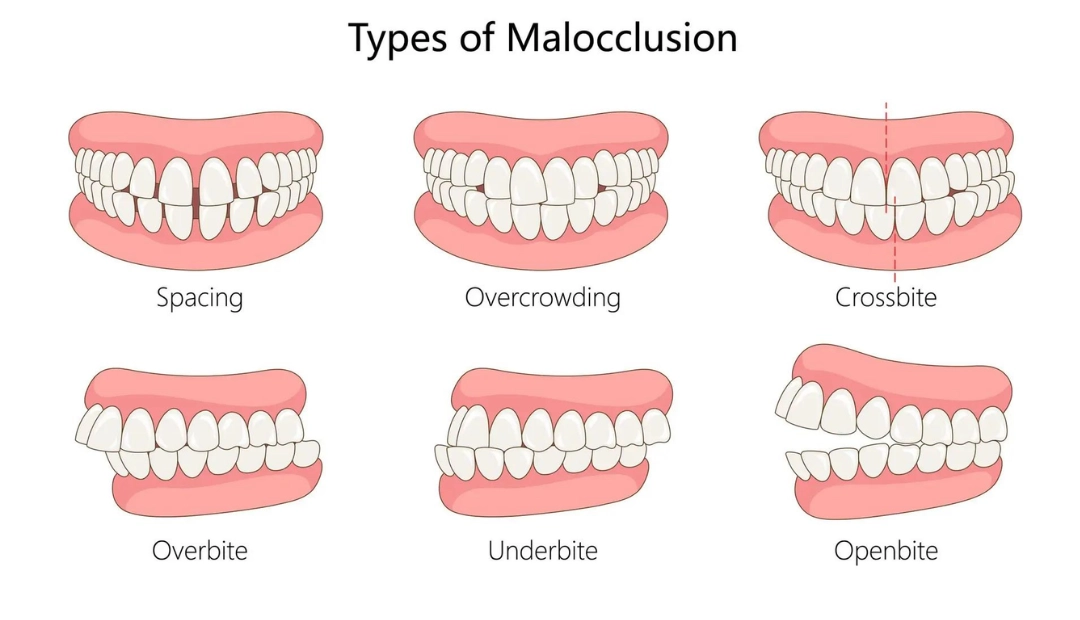
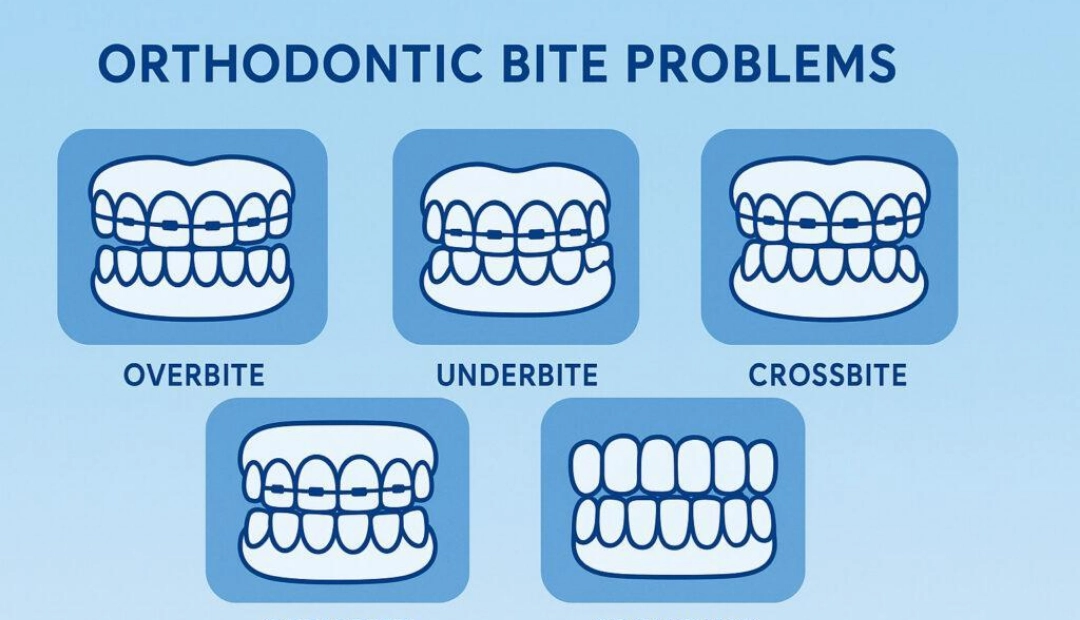
An overbite, underbite, and crossbite are three separate types of malocclusion. The difference depends on which direction your teeth or jaw are misaligned when your mouth is closed.
An overbite pushes the top teeth too far forward. An underbite lets the lower jaw sit ahead of the upper jaw. A crossbite happens when specific teeth sit on the wrong side of their opposite number. Telling these apart matters because each bite problem calls for a different treatment approach and timeline. Below, DKO Smiles breaks down what each one looks like, what causes it, and how treatment works.
What Is a “Normal” Bite?
A normal bite means that the upper teeth sit slightly in front of the lower teeth and overlap them slightly. It is usually just a couple of millimeters when the jaw is relaxed and the mouth is closed. Your back teeth should mesh together comfortably without any single tooth taking on more pressure than the rest. Any bite that falls noticeably outside this range, whether the top teeth cover too much, too little, or sit in the wrong position entirely, counts as a form of malocclusion.
Overbite: Upper Teeth Sit Too Far Forward
An overbite occurs when upper teeth overlap your lower front teeth too much. It can cover a wide area of the bottom teeth and may affect your bite. The problem becomes serious when upper teeth reach the roof of your mouth. A little overlap is normal, but a deep overbite can cause serious problems. It can put extra wear on the front teeth and can crowd the lower jaw over time.
Common causes
Genetics also have a major role in overbites because jaw size often runs in families. Sometimes poor childhood habits such as thumb-sucking can push upper teeth forward. A federal health survey found that about eight percent of Americans have severe overbites. This shows just how common this serious bite problem really is today.
How do braces correct it?
Braces correct an overbite by gradually guiding the upper front teeth back and lifting the lower teeth. Over time, they bring the bite into a healthier vertical relationship. Mild to moderate problems often respond well to braces or clear aligners alone. However, more severe overbites tied to jaw growth may call for growth-guiding appliances in younger patients.
Underbite: Lower Teeth Placed in Front of Upper Teeth
An underbite means the lower front teeth and jaw sit out in front of the upper teeth instead of behind them, which is the reverse of a typical bite. This pattern can make chewing harder and put extra strain on the jaw joint. The lower jaw has to work at an unnatural angle to bring the teeth together.
Common causes
Underbite problems usually stem from inherited jaw growth patterns. This happens when the lower jaw grows more than the upper jaw, or when the upper jaw doesn’t grow as much as the lower jaw. Missing upper teeth or long-term thumb-sucking can also contribute. Because jaw growth is involved, underbites are often easier to correct the earlier they are caught.
Treatment differences vs overbite
Underbite treatment depends more on guiding jaw growth than on overbite treatment. The main problem is the difference between your lower and upper jaw. It is different from a tooth position problem. Teens or young adults can use appliances that encourage their upper jaw to grow forward. However, adults with severe underbite sometimes need jaw surgery alongside braces. It helps to correct the bite.
Crossbite: Upper and Lower Teeth Don’t Line Up
You may experience a crossbite when your upper teeth sit inside your lower teeth. It is the opposite of how your teeth should be. This problem can affect one or more teeth, or even an entire section of teeth. It can also push the jaw slightly sideways as the mouth adjusts naturally. This shift happens because the mouth tries to make room for uneven teeth.
Anterior vs posterior crossbite
An anterior crossbite can affect your front teeth. It happens when one or more upper teeth adjust behind the lower teeth instead of in front of them. But a posterior crossbite affects your back teeth. In this condition, your upper molars or premolars sit inside the lower ones rather than outside. Posterior crossbites are more common and often go unnoticed until a dental exam catches them.
Role of palatal expanders
A palatal expander widens a narrow upper jaw by applying steady pressure. It gradually creates more space for the upper teeth to align properly. So, the upper teeth sit naturally outside the lower teeth. It works best in young adults because their jaw bones have not fully fused. That is why early evaluation matters so much for crossbite cases.
Side-by-Side Comparison Table
Seeing all three bite issues together makes their differences easier to spot. This view also shows how overbite, underbite, and crossbite can sometimes overlap.
Overbite | Underbite | Crossbite |
| Top teeth sit too far forward | Bottom teeth sit too far forward | Upper and lower teeth swap position |
| Genetics, thumb-sucking | Inherited jaw growth, missing teeth | Delayed baby teeth loss, narrow jaw |
| Can affect front teeth only | Affects the whole lower jawline | Can affect one tooth or a group |
| Braces or aligners in most cases | Growth appliances or jaw surgery | Palatal expanders, then braces |
Why Untreated Bite Problems Get Worse, Not Better?
Untreated bite problems tend to get worse over time. This is because the constant, uneven pressure from a misaligned bite gradually wears down enamel. This strains the jaw joint and can shift teeth even further out of position. A mild overbite or a one-sided crossbite in childhood often becomes a more complex case by adulthood. Sometimes requiring jaw surgery instead of the braces alone that would have worked years earlier. Catching bite issues early almost always means a shorter, simpler treatment path.
Frequently Asked Questions
What’s the easiest bite problem to fix with braces alone?
Usually, mild or moderate overbite cases are easy to correct with braces or clear aligners alone. This is because the problem is with tooth position, not with jaw structure.
Can a crossbite fix itself without treatment?
A crossbite rarely corrects itself. Without treatment, it tends to stay the same or worsen. That is why early evaluation matters even for baby teeth.
At what age should a crossbite be treated?
Crossbites are often easiest to treat between ages seven and eleven. At that age, jaw bones are still growing and respond well to a palatal expander.
Do all underbites need surgery?
Not all underbites need surgery. Mild cases noticed early can often be guided with growth appliances and braces. Significant skeletal underbites in adults may need jaw surgery.
How do I know which bite issue I have?
The only reliable way to know is a bite exam with an orthodontist. Overbite, underbite, and crossbite can look similar to an untrained eye but need very different treatment plans.
Final Thoughts
Now you know well about the difference between overbite, underbite, and crossbite. All of them are forms of malocclusion. Because they differ in nature, each affects the teeth and jaw differently. So, each one needs a specific treatment. Dentists can recommend anything from braces and clear aligners to palatal expanders or, in more complex cases, jaw surgery. The main thing is that bite problems rarely correct themselves. Delaying treatment can make it harder to fix later.
Dietrich & Kelso Orthodontics helps patients across several Tampa-area communities identify their exact bite problem. Then, the team creates a clear treatment plan that fits their specific needs.

Dietrich & Kelso Orthodontics
Dietrich & Kelso Orthodontics provides advanced orthodontic care with Invisalign and ceramic braces to help patients achieve healthy, confident smiles. We specialize in modern teeth straightening solutions for kids, teens, and adults, with a focus on comfort, precision, and long-lasting results.
Book a Free Consult