

Taking care of your braces can feel tricky, especially when you’re at school. With so much going on, it’s easy to forget or feel unsure about how to keep your teeth and braces clean. But don’t worry—cleaning your braces after eating isn’t as complicated as you’re thinking. Simple procedures that you merely need to take will work in keeping you and your smiling braces in such a great position. In today’s blog article, I want to share with you everything you need to learn about cleaning after eating at school with braces, so keep reading this post. Why Cleaning Braces After Eating is Important Let’s begin with the issue of cleaning braces. It has nothing to do with your beauty. It involves oral hygiene as well as not developing problems, such as cavities, gum issues, or staining. Because braces create openings that allow easy collection of food particles and bacteria, cleaning teeth properly and promptly is even more important. This could mean a quick clean-up kit at school that does not include all the tools for proper dental care but still protects the teeth and keeps the smile beautiful and confident. So, dentists suggest a few minutes of braces cleaning after eating. Must-Have Braces Care Kit for School This basic kit has all the following items listed below: Travel Toothbrush and Toothpaste Additional Rubber Bands Braces Wax Pocket Mirror Small Bottle of Mouthwash Floss and Thread Step-by-Step Guide to Cleaning Teeth Braces After Eating Now comes the most important part of the cleaning process. How to ensure one maintains his or her spotless braces after dinner in school. First, rinse your mouth Once you have had a snack or meal, wash with water. Next, swish the water around in your mouth for about 30 seconds. This will loosen any food particles that may be stuck in the braces. This little trick is really effective because it clears away larger chunks of food before you even brush. Use a mirror to inspect your braces It is helpful to have a little pocket mirror. If you do not, you will need a bathroom that has a mirror. But small pocket mirrors really come in handy. All that you need to do is observe your braces up close and thoroughly with your pocket mirror. You will be able to clean out your brackets and wires very soon. Brush Your Teeth Properly If your braces aren’t feeling absolutely clean after a rinse, it’s best to brush your teeth. Use a travel toothbrush with a minimal amount of toothpaste and brush in circular motions. Be sure to clean around the gum line, over the brackets, and under the wires. Most dentists recommend brushing for at least two minutes for an optimal result. Also, keep the brush at different angles and reach all corners. This prevents food particles from getting stuck and developing plaque, which is very important when orthodontic devices are worn. Use an Interdental Brush for Tight Spots Wires and brackets are the most sensitive places to hold food pieces. A regular brush might not be able to clean all areas. That’s why an interdental brush is perfect and can do all that very smoothly. Flossing Between the Teeth After orthodontic appliances, now it is time to brush your teeth. There is an ideal way for flossing, which is to put it under the wire and then up and down or between the teeth. But be cautious not to snap the floss or rub your gum. This step removes food trapped in difficult-to-reach areas. Rinse Again with Mouthwash or Water After brushing and flossing, rinse your mouth with mouthwash or water. Since it will freshen your breath, which is a nice bonus after eating at school. Why Choose Us? For over 40 years, Dietrich & Kelso Orthodontics has successfully provided patients with confident smiles. Our professional staff ensures you receive the best in orthodontic care. We believe every smile differs, so we will customize treatment to fit your needs. Flexible payment options and convenient office hours are also available after that. So, whether you require braces, aligners, cleaning kits, or something else, you’re always WELCOME! We’re here to make your journey smoother and stress-free. You can trust our experience and excellence. Final Thoughts So, we concluded that looking after your braces at school is not that dreadful. With some preparation and tools, you can clean your braces very fast and quite effectively. With this step-by-step guide and its consistency, you’ll keep your braces clean, your teeth healthy, and your smile looking bright. However, the key is to always remember that staying proactive is the key. It will save you time and prevent many significant problems later.

How Long is Invisalign Treatment?
Millions of people in the U.S. are working on straightening their teeth at any moment. Traditional braces were the most common way to fix misaligned teeth for a long time. However, Invisalign has become an exciting and popular alternative. These clear aligners are a modern solution for those who are looking to achieve a straighter smile without the wires and brackets. However, many people ask, “How long does Invisalign treatment take?” In this blog post, we’ll explore the timeline for Invisalign and what factors might affect it. If you’re considering this option, keep reading to learn more about how Invisalign works and how it might fit into your journey to a beautiful, confident smile. Factors That Affect Invisalign Treatment Time Well, that depends upon various factors like: How severe is the problem (malocclusion)? What correction do you desire? What correction is feasible? How regular are you at wearing them? Your age Consistency in Wearing Aligners After Invisalign treatment, like correction or adjustment of bite With the recent advances in Invisalign, it takes almost the same or a little less time than regular braces. Why Invisalign Treatment Duration Differs for Everyone Since the Invisalign process is highly personalized, your treatment time could be as short as one year, while someone else might need two years. Let’s explore some of the reasons your timeline could be a little different. 1. Crowded Teeth If your teeth are slightly crowded, Invisalign might fix the issue in as little as six months. However, for more severe crowding, the process can take much longer. In some cases, your orthodontist may even suggest additional treatments, like headgear or tooth extractions, to create enough space for proper alignment. This is why it’s so important to have a detailed consultation. Your orthodontist will evaluate your case and let you know if Invisalign is the right choice for you. 2. Gaps Between Teeth Similar to crowded teeth, the time it takes to close gaps with Invisalign can vary. A small gap might only need around eight weeks to fix, while larger gaps could require a longer treatment period. It’s also important to stick to your orthodontist’s plan to keep gaps from reopening. After your treatment is complete, wearing your retainer as instructed will help ensure the gaps don’t return. 3. Teenagers vs. Adults The difference in Invisalign timelines for teenagers and adults isn’t always huge, but there are some things to consider. Most of the time, how responsible the person is with wearing the aligners plays a big role. For aligners to work, they need to be worn for at least 22 hours a day. While adults usually stick to this schedule, teenagers might be less consistent. To help with this, Invisalign has special trays for teens that come with compliance indicators. These trays have blue dots that fade as the aligners are worn. If the teen wears them for the full two weeks (or 336 hours), the dots will disappear. If they don’t, the treatment will take much longer than expected. What is the Average Treatment Time for Invisalign? Now you know about the factors that can affect treatment time for Invisalign. Usually, Invisalign treatments last between 12 to 18 months, but here’s an average time for various cases: Mild Alignment Issues: 6 to 9 months Moderate Alignment Issues: 12 to 18 months Severe Alignment Issues: 18 to 24 months Your dentist can provide you with a better estimate depending on your teeth misalignment situation. Remember, these are just averages, and your experience might be faster or slower depending on how well you follow the plan. What is the Shortest Time for Invisalign Treatment? If you have mild alignment problems and take proper care according to your dentist’s recommendation, your treatment can be shorter. The shortest time for Invisalign treatment can be around 6 months. How quickly do your teeth move with Invisalign? On average, the time can be around 6 to 12 months. You need to change the aligners set every week or two. Most patients start noticing the results within the first two months. Can Invisalign be done in 3 months? You may see betterment in alignment within 3 months after placing the first aligner tray. However, for complete alignment correction, 3 months is not enough. You must take this treatment at least 6 months. Is Invisalign Show Faster Results Than Braces? Yes, the usual time for the braces to show results is around 18 to 24 months. However, Invisalign’s maximum time is 18 months, which can also be reduced to 6 months for minor issues. Why Dietrich & Kelso Orthodontics is the Best Treatment Centre for Invisalign? Invisalign is a consistent process that requires proper treatment and care to show results. To get fast and long-lasting results, it is essential to prefer only a trusted clinic for treatment. After detailed research, we found Dietrich & Kelso Orthodontics is the best clinic for misaligned teeth. We recommend Dietrich & Kelso Orthodontists because they have over 40 years of experience in the field. During this time, their best dentists have dealt with thousands of Invisalign cases of every age and severity. Their advanced tools, modern techniques, and excellent care for their patients are what sets them apart. Every case is important to them, and they remain with you until you are satisfied. The best thing is that they charge very reasonably without compromising service excellence. Final Thoughts Invisalign treatment time varies for everyone, but most people can expect it to last between 12 and 18 months. However, most of the cases can be solved within 12 months. You can further reduce the treatment time with proper care and strictly follow recommendations. You may start seeing results within 2 or 3 months of taking your first aligner tray. However, the shortest time for treatment is at least 6 months. Your dentist’s expertise also affects the time for Invisalign treatment. So, always prefer a reliable and well-reputed dentist clinic like Dietrich & Kelso Orthodontist. They promise excellent services and

Is Invisalign better than braces? [Invisalign Vs. Braces]
Deciding which would work best for straightening your teeth is difficult. Braces or Invisalign? Weigh the pros and cons first to know exactly what would suit you. This can be started with some research, questioning, and a joint effort with your orthodontist to determine which best fits your situation. The best choice sometimes depends on the problem you want to solve. As a reminder, not everyone is a candidate for Invisalign. Therefore, professional help is very much necessary. In this blog post, we will also outline the pros and cons of braces and Invisalign. This will make it easier to make the right decision. Popular Orthodontist Treatments No doubt, traditional braces, and Invisalign are two important terms mostly used in orthodontist treatments. However, to know whether braces are better than Invisalign, you must know how they work. Working of Traditional Braces It has taken many years for people to get used to putting on braces and using them to arrange their teeth neatly. Braces consist of wires, brackets, and elastic bands that are held on the teeth so that gentle traction pushes the teeth to appropriate positions in the mouth. Braces work wonderfully on all dental misplacements ranging from simple, crowded teeth to highly complex misalignment cases of the teeth. The appliances are fixed on the teeth, and treatment may be completed between 1 and 3 years, depending on the case. Working of Invisalign Invisalign is an advanced procedure for aligning teeth and treating bite issues. It involves using clear aligners adapted specifically for your teeth. You wear the full set for two weeks, after which you are supposed to replace them with another set to maintain constant movement of the teeth to your desired position. Most adults and teens prefer discreet treatment, favoring Invisalign. Main Differences Between Invisalign vs. Braces Appearance Invisalign wins in appearance. The clear aligners are not very noticeable, which is great for people who prefer to look like their teeth are aligned during treatment. People feel more self-conscious wearing braces and, therefore, choose Invisalign. Even the clear and ceramic options with braces are visible. Comfort Invisalign aligners are also more comfortable since they do not contain brackets or wires that may irritate the mouth. The metal parts in braces can cause a little discomfort, especially in the early stages. Both treatments can be associated with mild soreness as they work to shift your teeth. Care and Cleaning Braces require extra care to maintain hygiene. Brushing and flossing are challenging because of the brackets and wires, so special tools are needed. Invisalign aligners are removable, so brushing and flossing are easy as usual. However, they need to be cleaned regularly to prevent bacteria buildup. Treatment Time It usually takes 1 to 3 years to finish the treatment with braces, depending on the case. Invisalign can be faster, with some cases completing the treatment in about 12-18 months. Complex cases tend to take longer. Dietary Restrictions Braces limit what you can eat. You cannot eat hard, sticky, or crunchy foods with Invisalign; otherwise, they can be damaged. However, you can have whatever you like because you will remove the aligners during mealtime. All you need to be mindful of are sugary or acidic drinks while you are wearing the aligners. Effectiveness Both Invisalign and metal braces are effective for the straightening of the teeth and fixing of bite problems. Invisalign is perfect for mild to moderate cases, but you might be better with braces if your teeth are more badly misaligned. Your dentist can help you choose the right option. Cost of Treatment Invisalign is normally more costly than metal braces; it has an advanced design and technology; however, most people are willing to pay for this because it is comfortable, convenient, and invisible. Your dentist will help you compare costs and see what works best for you. Why is Invisalign Better than Braces? The answer to why Invisalign is better than braces can only be possible if you know its pros and cons. So, read this section carefully. 1- Braces Pros Able to solve almost all sorts of dental conditions, even worse cases. Appearance-wise, this kind of ceramic brace seems to be much more aesthetic This usually costs less than Invisalign Cons It can be displayed on your teeth. It can be painful and itchy. Extra care is needed with food intake restrictions. 2- Invisalign Pros Nearly invisible for a more natural look. It can be removed for easy eating and cleaning. It is more comfortable since there are no metal parts. Cons It is not ideal for very severe dental problems. It requires you to wear them 20–22 hours daily for the best results. Typically, it costs more than braces. Choosing Between Braces and Invisalign If you are wondering why Invisalign is better than braces, it comes down to what matters most to you. You must consider the following factors when choosing between these treatments. 1. Dental Problems It is important to consider the type of dental issue you have. Braces work best for big problems like large gaps, crowded teeth, or badly aligned bites. Invisalign is a better choice for smaller, less serious problems. 2. Lifestyle and Looks Think about your lifestyle and how much appearance matters to you. If you want an unnoticeable treatment that fits a busy life, Invisalign is a great option. If you are okay with braces being visible and want the best results for tough dental problems, braces are a better option. 3. Budgets As you already know, Invisalign is usually more expensive than braces, but the exact price depends on how long your treatment takes and what kind of dental problems you have. It also depends on the clinic you choose for your treatment. 4. Your Orthodontist Your orthodontist will help you choose the right option. They will look at your dental health and listen to your preferences to suggest the best solution. If you want expert orthodontists, you must contact a trusted clinic such as DKOsmiles.

5 Best Invisalign Alternatives [Cheap & Trusted]
Are you experiencing problems with misaligned teeth? They can affect you differently, such as poor oral health, personality, and loss of confidence. Invisalign is the best solution to move your teeth into perfect alignment. Invisalign is the best option for teeth alignment, but it may not suit you. You may have a low budget or time issues, so you are looking for an Invisalign alternative. If you are looking for, then do not go anywhere. We will show you the 5 best affordable and trusted Invisalign alternatives. Let’s read and choose the one that suits you. Invisalign Alternatives: Quick Comparison Treatment Treated Case Severity Treatment Time How To Start Treatment Treatment Monitoring Treatment Cost Invisalign Mild to severe 6 to 24 months Visit an orthodontist or dentist for consultation In-person and virtual monitoring $3,000 – $8,000 Clear Braces Mild to severe 12 to 24 months Visit orthodontist for fitting In-person check-ups $2,500 – $6,000 Metal Braces Mild to severe 12 to 24 months Orthodontist fitting required Regular in-person visits $2,500 – $7,500 Candid Mild to moderate 6 to 11 months in-person scan In-person check-ups or virtual check-ups around $1,900 Motto Mild to moderate 4 to 6 months Dentist consultation or in-person scan Remote monitoring or In-person check-ups $1,999 – $ 2500 New Smile Mild to moderate 4 to 6 months At-home impression kit or in-person scan Remote monitoring by dentist $1500 to $4000 Note: Invisalign treatment time and cost can vary depending on case severity and changing location or dentist clinic. 5 Best Invisalign Alternatives With every passing day new techniques are coming in the medical industry to deal with teeth issues. Currently several options are available that you can choose instead of Invisalign. However, here we have listed out the best Invisalign Alternatives that you can consider while looking for: 1- Clear braces Clear braces are in first position and can be the best alternative to Invisalign. They are affordable and reliable for many people. Clear braces offer a more budget-friendly choice than Invisalign but with almost the same benefits. The best thing about clear braces is that it suits both kids and adults to straighten their teeth discreetly. To get this treatment, you will have to visit the dental clinic where the expert dentist will place metal brackets with clear wires. Clear braces treatment usually takes 12 to 24 months, compared to Invisalign. However, the time can be reduced or increased depending on the severity of the case. The average cost of clear braces ranges from $2,500 to $6,000, which is often less expensive than Invisalign. 2- Metal Braces Metal Braces are another good option if you are looking for a treatment other than Invisalign to straighten your teeth. It suits people seeking a confident smile. It is the perfect option when looking for a budget-friendly but trusted alternative. This treatment is equally beneficial for both adults and teenagers. You can enjoy similar treatment benefits to Invisalign. In metal braces, traditional metal or ceramic braces are used to work well for all levels of teeth correction. Usual treatment time can be anywhere between 12 to 24 months. Your average cost to get this treatment can range from $2,500 to $7000; however, it is still more affordable than Invisalign. 3- Motto Motto can also be a great alternative to Invisalign for straightening your teeth. It offers clear aligners to fix crooked teeth and bite issues. Motto is affordable and works well for people who want a more budget-friendly option. It’s perfect for adults and teens, providing a solution that fits different needs. One key feature of the Motto is its cost. While Invisalign can cost around $3,000 to $7,000, Motto starts at about $1,999. It’s a reliable choice for people looking to save money. Motto treatment is usually faster, too, with an average duration of 6 to 12 months. You can get treated in person at clinics or from home with remote check-ups. 4- Candid While looking for the best Invisalign alternatives, Candid also falls into the competition. It is best for a few things, like you will get clear aligners but much less than the Invisalign budget. Another reason to choose Candid is that it is an excellent option for busy people. They can easily set timings and schedules for remote check-ups. It is usually used for adults and older teens, but it is best for adults. However, ensure that you are eligible for the treatment. Treatment usually takes around 6 months but can vary depending on the case. On average, Candid costs around $1,900, much less than Invisalign. The treatment plan is easy to follow at home with the help of Candid’s app and virtual check-ins with an orthodontist. 5- New Smile New Smile is a great alternative to Invisalign for straightening teeth. It offers clear aligners that work well for mild to moderate dental issues. Unlike traditional braces, New Smile aligners are nearly invisible and removable, making them more comfortable. This affordable and simple option makes it ideal for those who want quality results without a high price. New Smile is best for adults and teenagers. However, it is not recommended for complex dental issues. Treatment is mostly done at home, with a few virtual check-ins. This saves time and avoids many dentist visits. The average treatment takes about 4 to 6 months. Costs start at around $1,500, which is much lower than Invisalign’s $3,000 to $8,000 range. Dietrich & Kelso Orthodontics: The Best Dentist Clinic for Your Teeth Problems Your Teeth problems can be severe that not only disturb your oral health or eating routines, but can damage your overall health and performance. So, always consult with a professional and trusted orthodontist that guarantees the successful completion of treatment. You may have hundreds of options around, but it does mean all are trusted. When it comes to trusted one, we recommend Dietrich & Kelso Orthodontics for your teeth treatment. Here are a few reasons why we recommend it: Over 40 years of delivering excellence

Is Invisalign Worth It? (Pros, Cons & Cost for Adults & Teens)
Everyone wants a perfect smile. But it becomes impossible if you are suffering from misaligned teeth problems. Millions of people are facing this and want an easy but permanent solution. The good news is that you now have multiple treatments to choose from. However, when we talk about a permanent and reliable solution, Invisalign is the first recommendation from orthodontists. It provides an excellent smile and gradually perfects it. But it is a time-consuming and costly treatment, so every patient has a common question before taking this treatment: Is Invisalign worth it? Usually, it is recommended for adults and older teens, so, in the blog below, we will provide you a complete breakdown of Is Invisalign Worth it for adults and teens. Stay tuned and know Invisalign worth. How Does Invisalign Work? Invisalign uses clear, custom-made aligners that gently move your teeth into place. Unlike traditional braces, they are comfortable, removable, and nearly invisible. You begin with a consultation, during which an orthodontist creates a treatment plan using digital scans of your teeth. These scans help design aligners that fit perfectly. Each aligner is worn for 20–22 hours daily, only removed for eating and brushing. Depending on your plan, you switch to a new set every one to two weeks. With each aligner change, your teeth gradually shift closer to their final position. Periodic check-ups ensure your progress stays on track. This step-by-step movement offers a more comfortable experience than metal braces. Since the aligners are smooth and custom-fitted, your mouth has less irritation. Invisalign helps you smile confidently during and after treatment. What is the Difference Between Adults and Teens Invisalign? Invisalign Teen and Invisalign for Adults are clear aligners that straighten teeth without metal braces. Invisalign Teen is designed for teenagers. It has a blue indicator to track wear time. Teens can remove them to eat, making it easier to enjoy their favorite foods. These aligners are also more comfortable and hygienic than metal braces. Invisalign for Adults works similarly to Teen but without the blue indicator. Adults often prefer Invisalign because it is less visible than metal braces. They are comfortable and allow for easy cleaning. It’s never too late for adults to improve their smiles, even in their 50s or 60s. In both cases, Invisalign aligners offer a discreet, flexible option to achieve a straighter smile without the hassle of traditional braces. Invisalign Worth for Adults Why Adults Choose Invisalign Invisalign offers clear aligners that are almost invisible, unlike metal braces. Adults prefer this subtle look, especially in professional settings. The aligners are smooth, making them more comfortable. You can remove them when eating, allowing you to enjoy all foods without worry. Cleaning your teeth is easier, too, as no wires are in the way. Benefits for Adults Invisalign aligners are less noticeable, making social and work interactions more comfortable. They are ideal for busy people because they can be removed as needed. They work well for fixing mild to moderate dental problems, such as crowded or spaced teeth. Challenges for Adults Invisalign costs more than traditional braces. It also requires dedication, and you must wear the aligners most of the day for good results. Invisalign Worth for Teens Why Teens Choose Invisalign Invisalign is a popular choice for teens because it’s discreet. The aligners are invisible, making them less noticeable than traditional braces. Teens also enjoy the freedom to remove them when needed, like while playing, eating, or brushing. Benefits for Teens Invisalign helps boost confidence, especially for active teens in social situations. They don’t have to worry about visible braces. It also offers convenience, with fewer trips to the dentist. There are no food restrictions, making it easier to enjoy meals. Additionally, removable aligners help maintain better dental hygiene. Challenges for Teens Wearing Invisalign requires discipline. Teens must wear the aligners for 20–22 hours daily to see results. There’s also the cost factor, which may be higher than traditional braces. Traditional Braces vs Invisalign: Key Differences Quick Comparison Chart: Traditional Braces vs Invisalign Highlighted Features Traditional Braces Invisalign Treatment Length 24 month 6-24 months Flexibility Fixed Removable Wearing Requirements Careful during brushing, flossing, and chewy foods Removable during brushing, flossing, or meals Gum Irritation Possible Very low risk Appearance Visible Invisible Cost Affordable Expensive Treatment Length Traditional braces usually take about two years to complete treatment. Invisalign, on the other hand, can take 6–24 months. The shorter duration of Invisalign depends on how consistently the trays are worn. Removability Braces are fixed and cannot be removed until treatment ends. Invisalign is removable, allowing flexibility when eating or brushing teeth. However, Invisalign trays must be worn for 20–22 hours daily for effective results. Daily Requirements Braces require careful brushing and flossing, and patients must avoid hard or chewy foods. Invisalign users must remove the aligners when eating, brush after meals, and maintain good hygiene to avoid stains on the trays. Gum Irritation Braces may cause some gum irritation due to wires and brackets. Invisalign offers a smooth and comfortable fit with no gum irritation. Appearance Braces, especially metal ones, are highly visible. Lingual braces are less noticeable but still not invisible. Invisalign aligners are nearly invisible, making them a discreet option for straightening teeth. Cost Braces are more affordable, costing between $2,000 and $6,000. Invisalign is slightly more expensive, ranging from $3,000 to $7,000. The final cost depends on the complexity of the treatment. However, Invisalign offers more consistent results. Dietrich & Kelso Orthodontist: Get the Best Invisalign Treatment Dietrich & Kelso Orthodontics is a great choice for Invisalign for both adults and teens. With more than 40 years of experience, they offer expert care you can trust. Their team is highly trained and creates personalized treatment plans just for you. The staff is friendly and ready to make every visit a pleasant experience. They use the latest technology and traditional care for the best results. They care about their community and create a warm, family-friendly environment. Your Invisalign treatment will be easy and

Invisalign Treatment Process (Step-by-Step Guide)
A beautiful smile can make you confident and give you an impressive look. It is now easier with Invisalign. Unlike traditional metal braces, Invisalign uses clear, removable aligners to straighten teeth. Knowing what to expect is important if you are considering starting Invisalign. So, how does the Invisalign treatment process work? Our blog post will walk you through each step, from your first visit to the final results. You will see how Invisalign combines modern technology with personalized care to give you the smile you have always wanted. Let us know about Invisalign and how this simple and convenient treatment can help transform your smile. What is the Invisalign Treatment Process? Invisalign is a teeth-straightening treatment that uses clear aligners instead of metal braces. These aligners are custom-made to fit your teeth, and you can gently move them into the right position over time. You wear each set of aligners for about 1-2 weeks, for 20-22 hours daily, only removing them to eat, drink, brush, and floss. The aligners are made from a smooth, flexible plastic that is comfortable and nearly invisible. Depending on your needs, the treatment can take several months to a year or more, giving you a straighter, healthier smile without the trouble of traditional braces. The complete Invisalign Treatment Process consists of the following main steps; Step 1: Initial Consultation The Invisalign process begins with a visit to an orthodontist or dentist who offers Invisalign. During this appointment, In short, this step gives you a chance to ask questions like how long the treatment will take, what your teeth will look like afterward, and how much it will cost so that you can get an idea of how the process works. Remember, this visit is often free or low-cost, so it is a risk-free way to explore your options. Step 2: Customized Treatment Plan If Invisalign is a good fit for you, the next step is creating a customized treatment plan. The orthodontist will use a 3D scanner or take impressions of your teeth to create a digital model. This technology allows them to map out the exact movements your teeth will take throughout the treatment. Not only will you get to see what your new smile will look like, but you will even get to see an actual virtual preview before your new smile is ready. This is a very in-depth plan to ensure your aligners will fit your teeth and work properly. Step 3: Making Your Aligners Once the treatment plan is finished, your orthodontist will create custom aligners. These aligners are BPA-free, which means they are safe and comfortable to wear. Each aligner is slightly different so that you can move your teeth gradually. It depends on your case; you may need a few aligners to a few dozen. Each aligner will need to be worn for about one to two weeks before stepping onto the next one in the series. Step 4: Wearing Your Aligners At that time (when you get your first set of aligners), you will wear the aligners for 20 to 22 hours a day. Only take them out when you need them. It is important to have that consistent wear to get the best results. The aligners are removable, and you can eat the food you love. Cleaning them is simple. You can rinse them with lukewarm water and brush them gently with a soft toothbrush. Initially, you may feel some pressure or discomfort as your teeth shift, which tends to go away after a few days. Step 5: Regular Check-ups with Your Orthodontist You will have regular check-ups with your orthodontist throughout your Invisalign treatment process, usually every six to eight weeks. During these visits, your doctor will check how your teeth are moving and give you the next set of aligners. In these appointments, you can comfortably address any issues or make adjustments to your treatment plan if needed. Staying on track with these visits ensures that your treatment progresses as planned. Step 6: Completing Your Treatment Your active Invisalign treatment process is complete once you have gone through all your aligners and your teeth have reached their desired positions. However, your orthodontist may recommend a retainer to maintain your results. A retainer is a custom-made device that keeps your teeth from shifting back to their original positions. It is similar to an aligner and can be removable or fixed to the back of your teeth. Initially, you will wear it all the time, but over time, you may only need to wear it at night. Why Choose Invisalign? Today, Invisalign holds a 6% share of orthodontic care for teens and an impressive 31% for adults.This percentage is increasing day by day. It is all due to these benefits; Is Invisalign Right for You? While Invisalign is effective for many people, it is not the right solution for everyone. It works best for mild to moderate alignment issues like gaps, crowded teeth, or minor bite problems. More complex cases may still require traditional braces. It is also important to wear the aligners according to your orthodontist’s instructions because skipping wear time can delay your progress. Wrapping Up! Invisalign is a modern way to get a radiant smile. By properly following the steps of the Invisalign treatment process, you can enjoy wonderful results in a matter of months. If you are ready to start this process, schedule a consultation with a qualified orthodontist at some well-reputed clinic like DKOsmiles right now. Be satisfied because, with Invisalign, your dream smile is closer than ever.

Can Invisalign Fix Jaw Alignment?
Jaw problems can sometimes cause more than just discomfort – they can lead to issues like teeth grinding or clenching, known as bruxism. This grinding can make conditions like temporomandibular joint disorder (TMD) even more painful. But can Invisalign help with these problems? Clear aligners, like Invisalign, are not just for straightening teeth; they can also assist in adjusting jaw alignment. By gently correcting your jaw’s position, they may reduce symptoms of TMD and bruxism. In this blog, we’ll explore how Invisalign works, its potential benefits for jaw alignment, and whether it’s the right choice for you. How Invisalign Works? Invisalign aligners use smart, simple mechanics to straighten teeth. These clear aligners are custom-made to fit your teeth snugly and apply gentle, constant pressure. And this pressure gradually moves your teeth into their proper positions over time. The aligners are made from flexible, BPA-free plastic that feels smooth and comfortable. You’ll wear each set for about two weeks before switching to the next one, allowing your treatment to progress. Plus, since they’re removable, you can easily remove them for eating, brushing, or special occasions. Targeted Movement of Teeth What makes Invisalign unique is how it targets the movement of specific teeth. Each aligner is designed to focus on certain teeth that need to shift. This precise targeting ensures that your teeth move in a controlled and effective way. The aligners gently guide your teeth into alignment based on a detailed treatment plan created by your orthodontist. Over time, this approach helps achieve a straighter smile without the need for bulky braces. Can Invisalign Aligners Fix Jaw Alignment Completely? Invisalign can be used to address various teeth and jaw alignment issues. However, it’s important to understand that Invisalign itself is not a standalone treatment but rather a tool in the hands of a skilled orthodontist. Let’s learn how aligners work in different situations to improve jaw alignment. Elimination of Tooth Interferences Sometimes, improper jaw alignment occurs because of tooth interferences. In these cases, Invisalign aligners can help when an experienced orthodontist carefully plans and executes the treatment. By eliminating these interferences, aligners can gradually align teeth and improve jaw function. This precise approach ensures the alignment issue is properly addressed. Aesthetic Camouflage In certain situations, Invisalign can be used to camouflage jaw imbalances aesthetically. If the necessary tooth movements are possible and result in a stable bite, aligners can make the jaw appear more balanced. While this doesn’t fix structural jaw issues, it can enhance your smile and improve how your teeth and jaw work together, giving you a more harmonious appearance. Imbalances Requiring Surgical Intervention For more severe jaw alignment problems, surgical intervention might be necessary. In these cases, Invisalign aligners can still play an essential role. Orthodontists use aligners to position the teeth correctly before surgery, ensuring everything lines up perfectly. The orthodontist works closely with an oral surgeon, who adjusts the jaw to match the bite setup. Success in these cases depends on the orthodontist’s ability to anticipate facial changes after surgery and plan the teeth’ positions accordingly. The orthodontist’s skill and experience are crucial for achieving a balanced and natural result. Invisalign: A Tool, Not a Treatment One of the biggest misconceptions about Invisalign is that it can fix structural jaw imbalances on its own. However, Invisalign is just a tool, and its effectiveness depends entirely on the orthodontist’s expertise. A skilled orthodontist can create a customized treatment plan that uses aligners to improve teeth and jaw alignment, but achieving the best results often requires more than just the aligners. So, What Are the Benefits of Using Invisalign for Jaw Alignment? 1. Discreet Appearance One of the biggest advantages of Invisalign is how discreet it looks. Unlike traditional braces with noticeable metal wires and brackets, Invisalign aligners are clear and nearly invisible. This makes them an excellent choice if you want to straighten your teeth or fix jaw alignment without drawing attention to your treatment. You can feel confident wearing them at work, school, or social events. 2. Convenience and Comfort Invisalign aligners are designed to fit comfortably over your teeth, with no sharp wires or brackets that can irritate your mouth. Plus, they’re removable, so you can easily take them out for meals, brushing, or flossing. This convenience simplifies maintaining good oral hygiene and enjoying your favorite foods without restrictions. The smooth, custom-made material ensures that wearing them feels natural and easy. 3. Gradual Alignment Invisalign works by gently and gradually moving your teeth and jaw into better alignment. Each set of aligners is carefully crafted to apply just the right amount of pressure, step by step. This steady progress reduces discomfort while making sure the alignment happens in a controlled and effective way. Over time, you’ll notice significant improvements in your smile and jaw positioning without the hassle of sudden or dramatic adjustments. Cases Where Invisalign May Not Be Suitable Severe Jaw Misalignments Invisalign is great for mild to moderate alignment issues but may not be the best option for severe jaw misalignments. When the jaw is significantly out of place or if there are major structural issues, aligners alone might not provide the correction needed. These cases often require more advanced treatments to address the underlying skeletal problems. While Invisalign can help with teeth alignment, it’s not designed to fix complex jaw issues. When Surgery or Braces Are Needed Sometimes, correcting jaw alignment requires a combination of treatments, including surgery or traditional braces. For instance, if a jaw misalignment is causing functional or aesthetic problems, an orthodontist might recommend surgery to reposition the jaw. Invisalign can still be used in these cases, such as preparing the teeth before surgery. However, braces are often better suited for achieving precise and complex movements that aligners can’t handle. Your orthodontist will carefully assess your situation to determine the best treatment plan for long-term success. Conclusion If your jaw misalignment is severe and requires orthognathic surgery, Invisalign aligners alone won’t be enough to correct the issue. However,
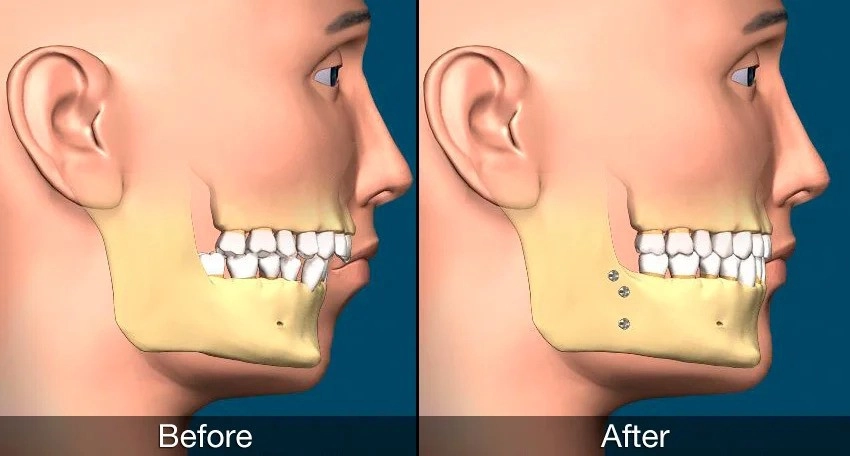
The Science Behind Proper Jaw Alignment With Braces
If you think of braces, the very first thought you think of could include straightening your teeth. But braces can do more than straighten your smile. They are also a key factor in correcting the jaw’s alignment. If you’re thinking, “Can braces fix jaw alignment in adults? The answer is yes. Proper jaw alignment improves the overall health of your mouth regarding comfort and function. Thus, understanding the science behind how braces can help you achieve this and why proper jaw alignment is essential for your health is crucial. What Is Proper Jaw Alignment? Neutral jaw position is how your two lower and upper jaws are positioned when chewing. It’s the condition where your jaws are correctly placed to ensure your teeth fit as required when chewing, biting, and even talking. However, any malocclusion, including underbite, overbite, or crossbite, can cause many problems, from wear and tear to headaches and joint pains. The Function of Braces In Jaw Alignment In Adults Braces come in a combination of wires, brackets, and elastic bands fixed gently between the teeth. When your teeth move along with the jaws, the foundations of bones at the jaws will soon change with the new postures. As time passes, the pressure also influences the jaw’s position, which helps it align correctly. Although this process is slow, it could dramatically improve your jaw’s health and bite. Do Braces Fix Jaw Alignment? Yes, If Done Properly. There are many methods by which braces can help correct jaw alignment. Can Braces Fix Jaw Alignment in Adults? Some people believe braces only work intended for teenagers. However, adults are also able to get orthodontic treatments. Indeed, many adults choose to use braces for problems with jaw alignment. However, whether your problem arose through time or was present in childhood, braces can fix the issue and assist in achieving a better bite. 6 Reasons Why Proper Jaw Alignment Is Important? A misaligned jaw can result in various issues, for example: As a result, a proper jaw alignment procedure is necessary. What Is The Time Frame For Correcting Jaw Alignment Using Braces? The effort spent to ensure the correct positioning of the jaws depends on the extent of misalignment, which could be with braces. While for some individuals, it could only take up to six months. Other people could even need many years. Braces are a process of slow retraining of your jaw to adopt an upright position, and therefore, following all the instructions given to you by the orthodontist is essential. Three Major Types of Braces for Jaw Alignment These braces are from the field of orthodontics and can be altered according to your needs and wants. The orthodontist you speak with will prescribe the best brace for the problems with how you live. The most popular braces are: Do Braces Fix Jaw Alignment? Braces are a solution to jaw alignment and are mainly used with other therapies like jaw surgery, retainers, or surgical procedures for serious malalignments. Orthodontists customize the treatment plan for your needs to ensure that your jaw and teeth are in sync. It’s a straight smile and a healthy and functional dental bite that improves the overall quality of life. Dietrich & Kelso Orthodontics For Getting Braces For Jaw Alignment Suppose you seek to improve your jaw’s alignment, either in childhood or as an adult. In that case, Dietrich & Kelso Orthodontics will be of assistance. Our experienced orthodontists analyze your circumstances and design a customized strategy to adjust your smile and jaw to ensure optimal comfort and functionality. We have many braces solutions that fit your needs and ensure you will get the highest quality outcomes. Conclusion Correct jaw alignment isn’t simply about appearances but overall oral health regarding comfort and how your teeth interact. Whether you’re an adult teen, braces could aid in correcting misalignments and enhance your smile and bite. Finally, you’ll get the healthiest, most aligned teeth and confident smile through time and proper treatment at Dietrich & Kelso Orthodontics.

Do Clear Braces Stain? Tips To Prevent Them From Staining
Clear braces are an attractive alternative to metal braces, providing near-invisibility when worn. While their clear design makes them invisible to the eyes, many users are concerned with whether their clear braces stain over time. Stains may take away their aesthetic appeal. With proper care and maintenance, however, stained clear braces can remain fresh and clean. If you need answers to questions like “Do clear braces stain easily?” and “How to unstain your braces?”, understanding a few tips and strategies for clear braces maintenance can be very helpful. Do Clear Braces Stain Easily? The answers will vary based on the meaning you want to convey when you say “clear braces.” It is generally understood that “clear” refers to either clear or ceramic aligner braces. Ceramic braces use elastic bands and brackets to match your teeth. Clear aligners on the other side are made of transparent plastic trays. Ceramic brackets are designed to resist staining. However, the elastic bands that support the wires may begin to fade in color over time. Ceramic braces are made up of elastic bands composed of porous materials which absorb pigments from drinks, food as well as smoking habits. This makes them more susceptible to turning brown or yellow as time passes. Clear aligners are not stained because they are often replaced. Common Reasons for Clear Braces to Stain Before understanding the strategies to prevent staining, it’s better to recognize what causes it. Common culprits include: How to Safeguard Your Clear Braces from Staining? Staining of clear braces bands is not uncommon but there are some practical methods you can follow to prevent the coloration. Here are some tips to help: Avoid Foods Known to Stain Braces Foods that cause staining must be avoided as it can help you avoid the staining problem. Try to avoid these items: Use water or mouthwash to rinse your mouth right away after you eat or drink something. Use a straw to drink beverages and minimize the contact of your braces with them. Brush Regularly Any food can stain your clear braces, but avoiding it is possible with regular brushing. A brush with soft bristles and fluoride-based toothpaste to clean your teeth after each meal is the key. Focus on areas around the elastic bands, as these could collect food debris or pigmentation build-up that could stain their surfaces. Choose A Mouthwash Wisely Mouthwash can help keep both teeth and braces sparkling clean, but some contain dyes that could stain clear braces. For maximum effectiveness and stain-free results, seek out clear, alcohol-free solutions as part of an effective oral hygiene routine. Select Stain-Resistant Bands Staining is not completely avoidable, but you can consult with your orthodontist about stain-resistant elastic bands. While no band is completely stainproof, certain models do a better job at resisting discoloration than others. Rinse After Eating Rinsing your mouth with water after meals can help remove food particles and pigments that stain your braces. For best results, swirl the water for at least 30 seconds around your braces or until no debris is left. Avoid Smoking Smoking tobacco products is one of the main contributors to staining braces and teeth, so to maintain whiter braces, it is wise to refrain from doing so altogether. Some Helpful Tips to Remove Stains If your clear bands have already discolored to yellow and you are asking how to remove stains on braces bands, there are still some ways to unstain them: Brush Thoroughly for Minor Stains When stains are not that noticeable, a soft toothbrush and fluoride toothpaste can still help unstain braces bands. Brush the stained areas in circular motions in order to dislodge any plaque or stains that might have been collected. Apply Baking Soda People often use baking soda due to its stain-removing capabilities. If you mix it with water, it will form an excellent paste to clean stained teeth and braces bands. Just be wary when applying it, as it can be quite abrasive. See Your Orthodontist to Get Your Bands Changed Worst cases of staining require an orthodontist to replace your braces bands. Clear braces treatment usually involves follow-up appointments every 4-8 weeks. During these visits, your orthodontist can swap out discolored bands with brand-new ones. How Dietrich & Kelso Orthodontics Can Assist You We at Dietrich & Kelso Orthodontics specialize in offering expert orthodontic care, such as clear braces and aligners, with our team of skilled professionals devoted to helping clients attain a confident smile while offering personalized advice for caring for their braces. From selecting stain-resistant bands to providing thorough cleaning tips, we ensure your clear braces remain discreet yet effective throughout treatment. Regular appointments with our team ensure treatment stays on track while any stained bands are quickly replaced in order to preserve the aesthetic of your braces’ appearance. Dietrich & Kelso Orthodontics can help. From beginning your braces journey to providing ongoing oral health maintenance services, our team has you covered. Final Thoughts on Keeping Clear Braces Stain-Free Do clear braces stain? Yes, but keeping them clean and clear is easy by following simple guidelines. Avoiding stain-causing foods and practicing excellent oral hygiene regularly, as well as visiting your orthodontist regularly, are ways you can help minimize discoloration. If your braces bands have turned yellow despite your best efforts, don’t worry. At Dietrich & Kelso Orthodontics, we can quickly replace them. Clear braces are more than a discreet orthodontic treatment. When used appropriately, they offer unmatched results. Additionally, the tips outlined above can always help you ensure a seamless braces journey without worrying much about stains.

Invisalign Costs, Insurance Coverage & Payment Options
Does insurance cover Invisalign? Depending on the specific policy, some dental coverage plans cover part of the cost. Dental insurance works differently for everyone, so testing your plan’s details is essential. For instance, a few policies might pay a set amount for Invisalign if it is covered as a benefit. Others won’t cover it if they consider it a cosmetic treatment. Reviewing your plan is crucial to understanding how much Invisalign costs with insurance. To understand the exact benefits, seeking advice from a financial coordinator or immediately contacting your insurance company is helpful. Knowing the insurance in advance can help lessen unexpected fees. The Cost of Invisalign with Insurance How much does Invisalign cost if you have insurance? The cost of Invisalign treatment varies depending on the coverage plan. In most cases, dental coverage covers 25% to 50% of the treatment price. However, this depends on the person’s plan and its terms. For example, two people with similar insurance carriers may additionally have distinct levels of coverage—one would possibly have 30% included, and at the same time, the other one would receive 25%. Most dental insurance plans also have a lifetime maximum benefit. Once this amount is reached, additional fees for Invisalign should be paid out of pocket. If the insurance covers a percent of the fee, patients often pay monthly costs to cover the rest of the amount. For instance, with partial coverage, you might pay around $83 consistently per three years, depending on the full treatment price. The Cost of Invisalign Without Insurance How much are Invisalign braces for those without coverage? The general price normally ranges between $3000 and $5,000, but it can exceed $8,000 to $10,000 for more complicated instances. The economic burden may be considerable without coverage, but many dental clinics provide price plans to make it more achievable. Patients without insurance should pay around one hundred dollars in step per month, based on the whole rate of their treatment and the agreed-upon price plan. The actual cost depends on factors like the severity of dental misalignment, the dentist’s fees, and the location of the hospital. How Invisalign is Different from Traditional Brace The essential distinction between Invisalign and conventional steel braces lies in the cost and treatment method. Invisalign normally has better costs, from $3,000 to $10,000, leaving many to wonder how much are Invisalign braces compared to standard options. In contrast, traditional braces are typically priced between $3,000 and $7,000. The Invisalign treatment is costly because of the advanced technology to create custom clear aligners. Traditional braces involve metal brackets and wires, which might be less elegant to wear and maintain. However, Invisalign offers several benefits, which include being nearly invisible and detachable, making it a desired option for many adults and teens. Factors That Affect the Cost of Invisalign: The cost of popular Invisalign treatment depends on several elements, including: Discussing those factors with your dentist will help you understand how much Invisalign costs to achieve your unique desires. Alternative Ways to Pay for Invisalign: For people who can’t have enough money for Invisalign treatment in advance, there are numerous optional payment alternatives to consider: Many dental clinics provide monthly payment plans to help patients spread the fee over the years. These plans frequently include no extra fees, but they’ll require a larger deposit initially. FSAs permit people to pay pre-tax amounts to cover medical and dental costs, including Invisalign. However, the FSA cost should be spent within a calendar year. HSAs are FSAs but don’t have any time constraint on when one must spend the amount available. This money owed is supplied for people who have medical insurance plans with a high-deductible stage. CareCredit is a committed credit score card for healthcare and dental services. Customers can pay for Invisalign in installments, typically at low interest. Exploring the one option that should make Invisalign treatment greater on hand, even without coverage. What Do You Need to Understand About Invisalign Treatment? Simply put, Invisalign is a contemporary orthodontic treatment that uses clear, detachable aligners to straighten teeth. It is a famous preference for people who choose a discreet and convenient alternative to standard braces. Invisalign aligners are custom-made to suit the affected person’s teeth and steadily shift them into the preferred position over time. Invisalign is effective for treating common orthodontic issues, along with Crowded teeth, Gaps between teeth, Overbites, Underbites, and Crossbites. Patients often decide upon Invisalign because these are nearly invisible and removable, making eating, drinking, and maintaining oral hygiene simpler. However, traditional braces can be the better alternative for intense orthodontic issues. Benefits of Invisalign Invisalign gives several benefits in comparison to traditional braces: The clean aligners are barely visible, making them best for adults and young adults. Aligners can be removed for consuming, drinking, and brushing teeth. Invisalign aligners are made of soft plastic, lessening discomfort than metal brackets and wires. Cleaning the aligners is simple, and they do not intrude with normal oral hygiene routines. All these advantages make Invisalign a famous preference, notwithstanding its higher price. If you need expert advice and personalized treatment, consult Dietrich & Kelso Orthodontics to explore your Invisalign options today! Conclusion: When considering Invisalign treatment, it’s critical to recognize the charges and discover insurance coverage options. For those asking, does insurance cover Invisalign? The answer depends on your unique policy. Some plans cover a percentage of the cost, while others may not cover it at all. For those questioning how Invisalign fees work, the overall fee varies primarily based on elements like treatment complexity, coverage, and location. Patients can make Invisalign treatment more affordable and achieve a confident, healthy smile by exploring alternative payment options like monthly plans, FSAs, HSAs, and CareCredit. If you need help understanding if your insurance will cover your Invisalign treatment costs, you can contact our team at Dietrich & Kelso Orthodontics. Remember, whether you choose Invisalign or traditional braces, the decision should align with your oral health goals and financial situation.